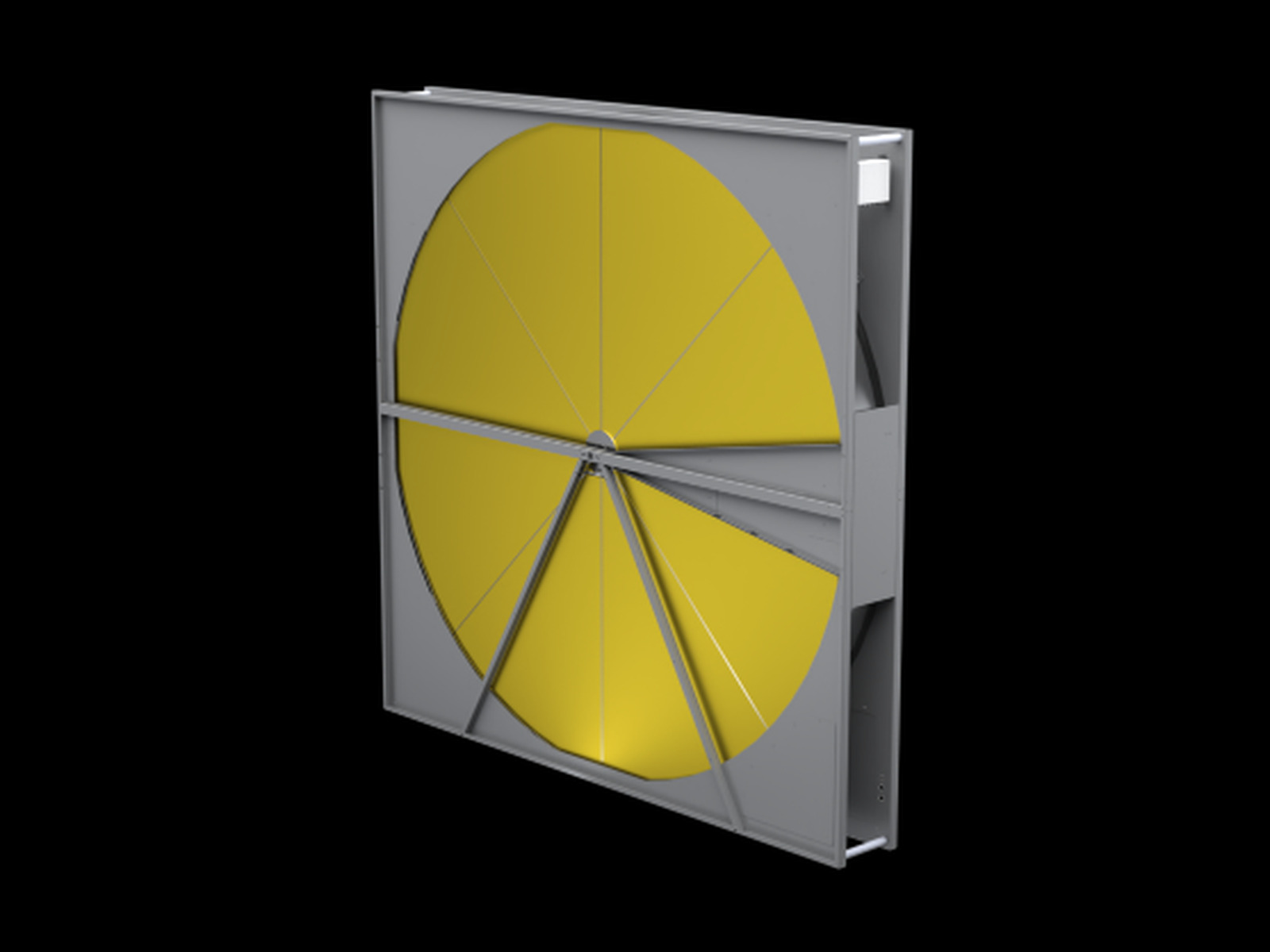
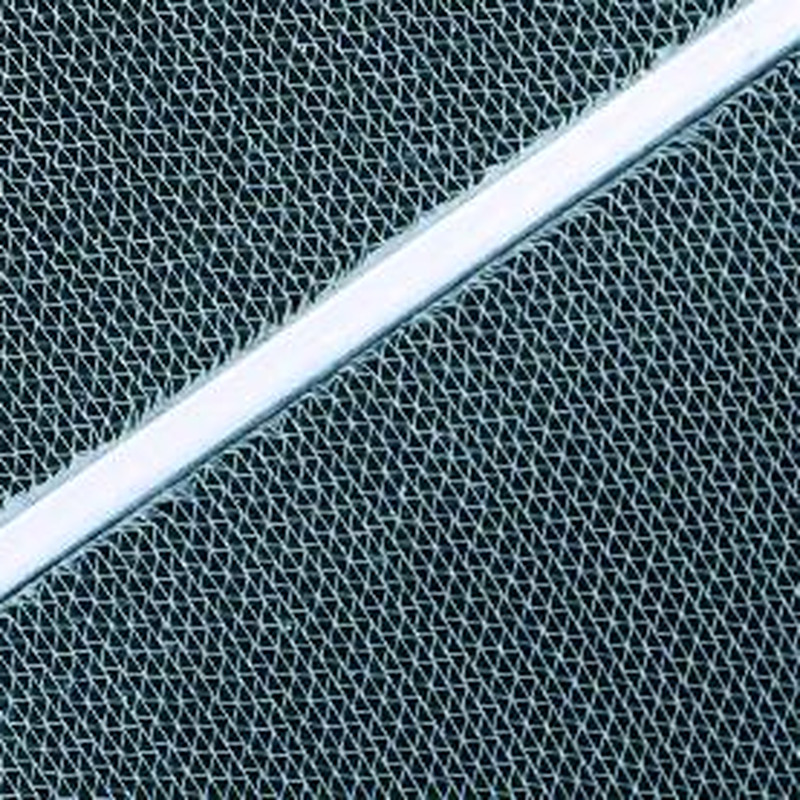
The wheel is made of thin metal foil folded into a very large number of air channels. As it turns through the exhaust air, the wheel surface takes up energy; as it continues into the fresh airstream, it passes that energy to the air entering the building, continuously.
Wheels with a desiccant coating (enthalpy wheels) recover both sensible heat and moisture. In a hot and humid climate like Thailand this saves a great deal of energy, because most of the coil load comes from dehumidifying fresh air.
Recovery can be controlled by changing the wheel speed, giving fine control of supply air temperature in mid-season or at low load.
Recovers both sensible heat and moisture (latent), reducing the latent load on the coil, the main load of air conditioning in hot and humid climates.
Typical dry temperature efficiency per manufacturer data; actual values depend on design conditions.
Wheel speed is adjusted to control how much energy is recovered, for accurate supply air temperature in all conditions.
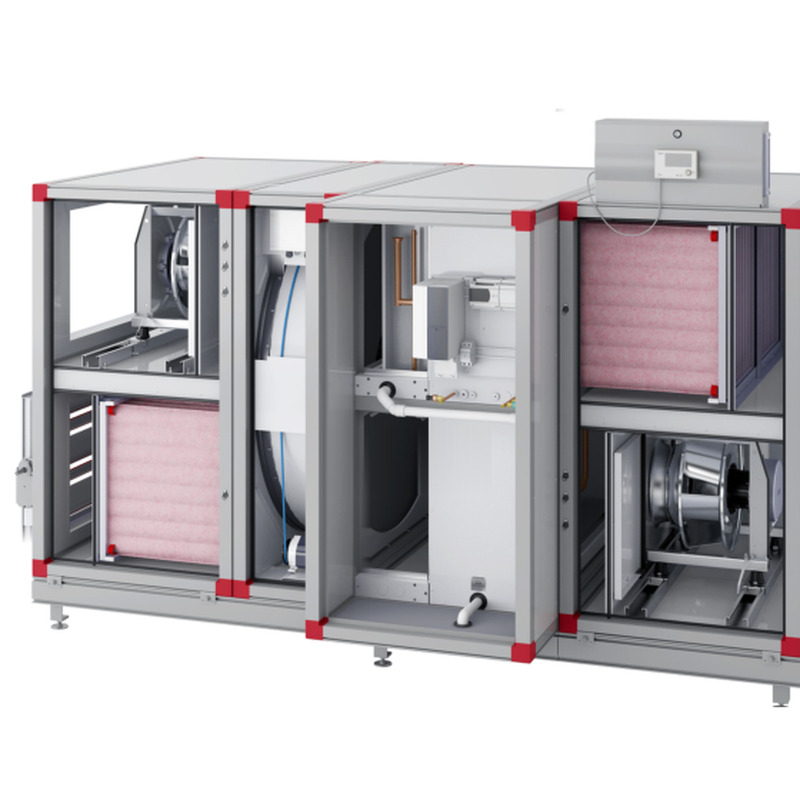
For medium to large AHUs, with airflows from 200 to 190,000 Nm³/h per manufacturer data.
Note: a rotary wheel always allows a small amount of mixing between the two airstreams. If your duty must never let exhaust air return (for example isolation rooms or chemical areas), choose a Plate Heat Exchanger instead.
Actual values depend on wheel size, face velocity and design air conditions.
Fluids, temperatures, flow rates and pressure are enough to start. Free initial consultation.
Share your basic specification or operating conditions (both airflows, inlet air conditions and available space) to get a thermal sizing and the best-fit quotation for your project.