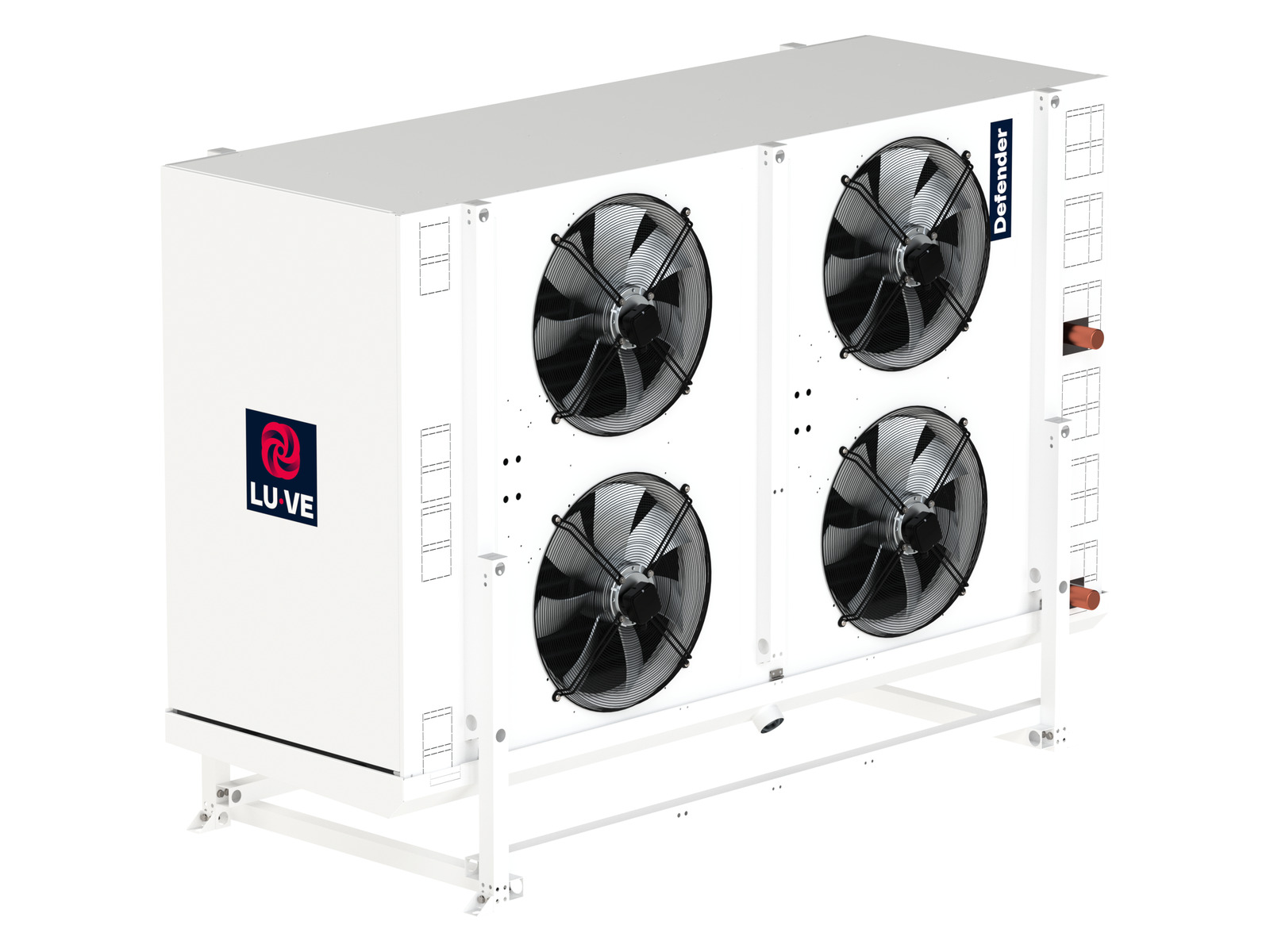
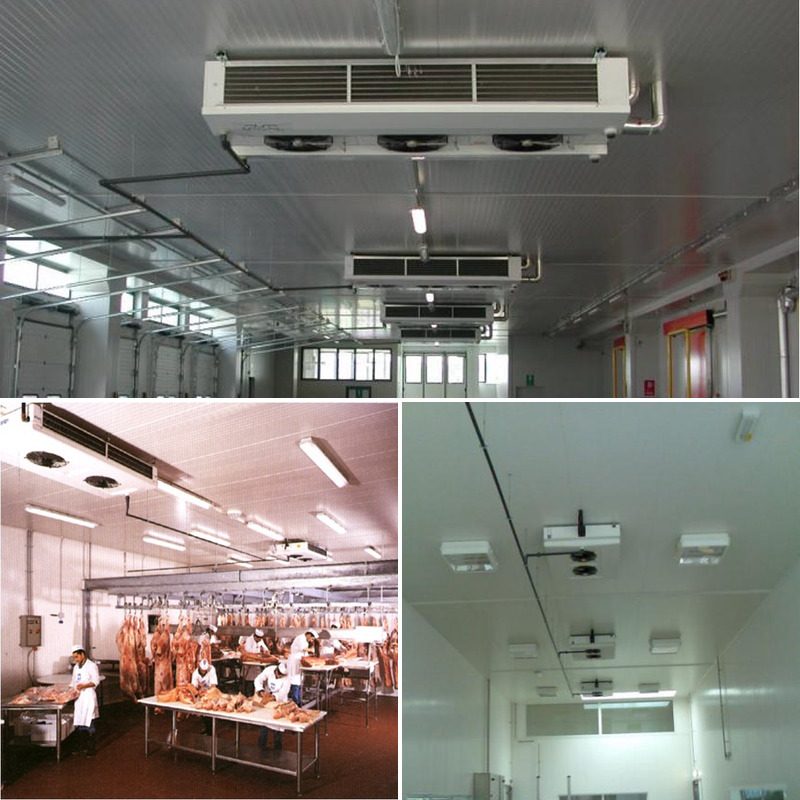
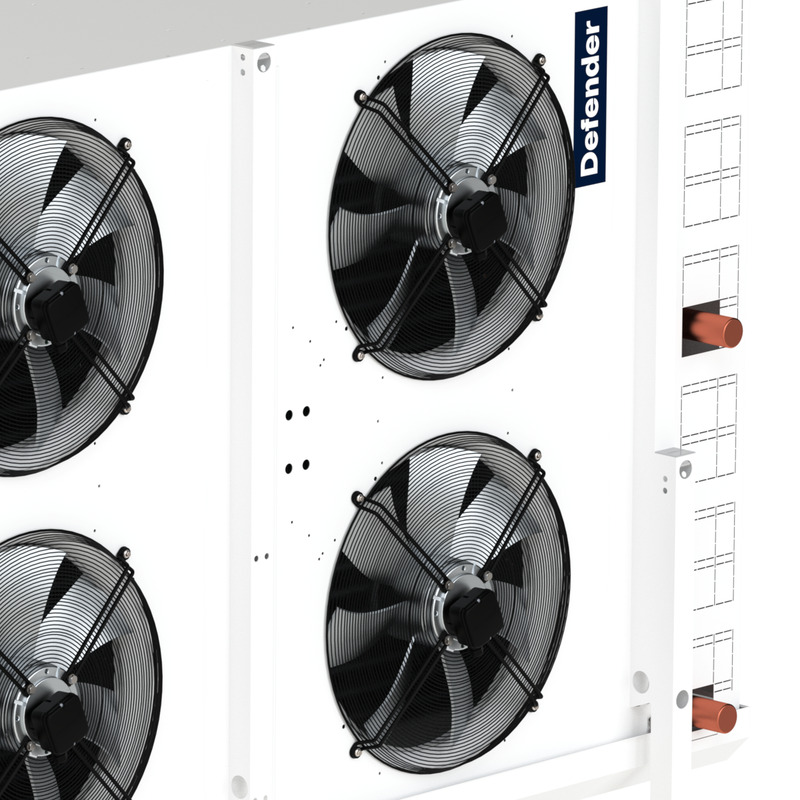
A unit cooler combines a finned coil and fans in one casing, circulating room air through the coil to remove heat. Selection is not only about cooling capacity: room temperature, product moisture and the air throw pattern all matter.
Fin spacing is a key variable. Freezer rooms that frost up quickly need wider fin spacing so the coil does not block, while warmer cold rooms can use closer fins to save space. Defrost (electric, hot gas or water) is chosen by operating temperature and how often the doors open.
Brine unit coolers work with a central brine circuit, reducing the refrigerant charge in work areas and making safety easier to manage.
Direct-expansion coolers, in ceiling-mounted, dual-discharge and low-profile versions for low-ceiling rooms.
Uses brine or glycol as the medium, reducing the refrigerant charge in the area and keeping the refrigeration plant in one place.
Coils for controlling temperature in production areas, curing rooms and staging rooms that need steady temperature and humidity.
Coil and casing materials chosen for the goods stored and the cleaning chemicals used, with electric, hot gas or water defrost.
Do not have all the data? Contact us anyway. We can estimate the load from room size and type of goods first.
Fluids, temperatures, flow rates and pressure are enough to start. Free initial consultation.
Share your basic specification or operating conditions (room temperature, room size and type of goods stored) to get a thermal sizing and the best-fit quotation for your project.